
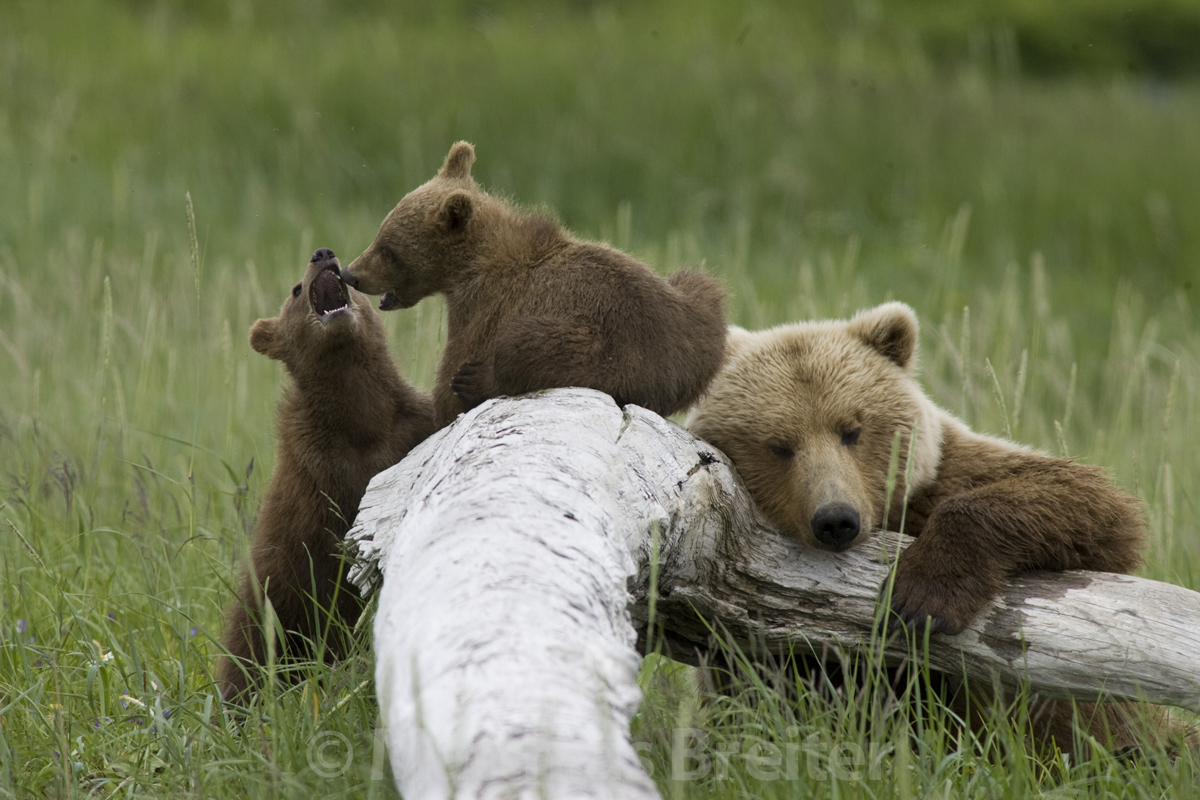
Planning an Alaska bear-viewing trip from Homer means choosing more than a destination. The strongest day combines the right season, aircraft, habitat, weather window, group size and guide judgment. This guide explains how Katmai, Lake Clark, Brooks Falls and remote coastal viewing differ - and how to choose the experience that fits you.
Quick answerHomer is one of Alaska’s best departure points for fly-in brown bear viewing because aircraft can cross Cook Inlet directly into roadless habitat. Trips may use a floatplane, wheel plane or helicopter. The exact location should remain flexible because bear activity, tides, landing conditions and weather change throughout the season.
How to choose the right Alaska bear-viewing trip
Start with the experience you want, not a famous place name. Some travelers picture salmon fishing at Brooks Falls. Others want open coastal habitat, fewer people, easier aircraft access, or more time photographing bears at ground level. Families and guests with mobility concerns may place a higher value on aircraft entry, walking distance and terrain.
A good operator should be able to explain how the day changes with current conditions. Ask how destinations are selected, what happens when weather shifts, how large the group will be, how much walking is typical and whether the guide remains with the group on the ground.
For the current commercial options, compare the floatplane and helicopter Bear Viewing Safaris. If you already know you want a broader combination of wildlife and landscapes, review the Ultimate Safari and custom combination safaris.
Katmai, Lake Clark and Brooks Falls: what is different?
Katmai National Park
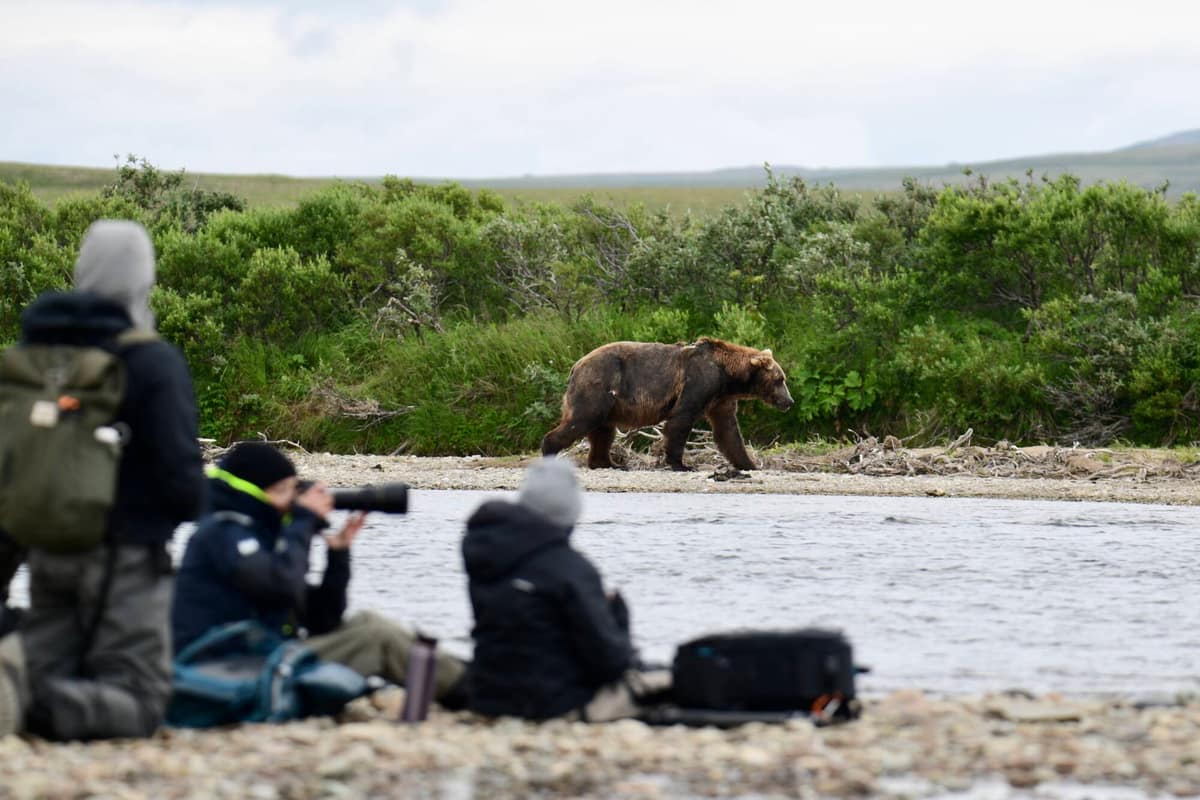
Katmai is enormous. Brooks Falls is only one part of the park. Depending on the month and current conditions, a bear-viewing day may involve the famous falls, coastal sedge flats, river systems, beaches or another productive habitat. The right location can change as food sources and bear movement change.
Travelers focused on the iconic falls should read Brooks Falls: Is It Worth the Hype? and the first-time visitor’s Katmai guide. Brooks Falls can be extraordinary, but it can also involve fixed access, other visitors and timing around salmon activity.
Lake Clark National Park and Preserve
Lake Clark is known for sweeping coastal habitat where bears may feed on sedges, dig for clams or move across open tidal areas. The viewing style can feel spacious and unstructured compared with a fixed platform. Conditions, tides and landing access still shape every visit.
See the Lake Clark bear-viewing day-trip guide for a focused comparison of access, terrain and seasonal behavior.
Remote coastal and private-access areas
Productive bear habitat is not limited to the best-known names. Experienced pilot-guides may use other remote areas when they offer safer access, stronger wildlife activity or fewer people. Flexibility is valuable because bears follow food rather than marketing calendars.
When is the best time for Alaska bear viewing?
There is no single best month for every traveler. Early-season bears may concentrate in coastal meadows and sedge flats. As summer progresses, salmon runs become increasingly important in many river systems. Late summer and early fall can bring intense feeding activity as bears prepare for winter.
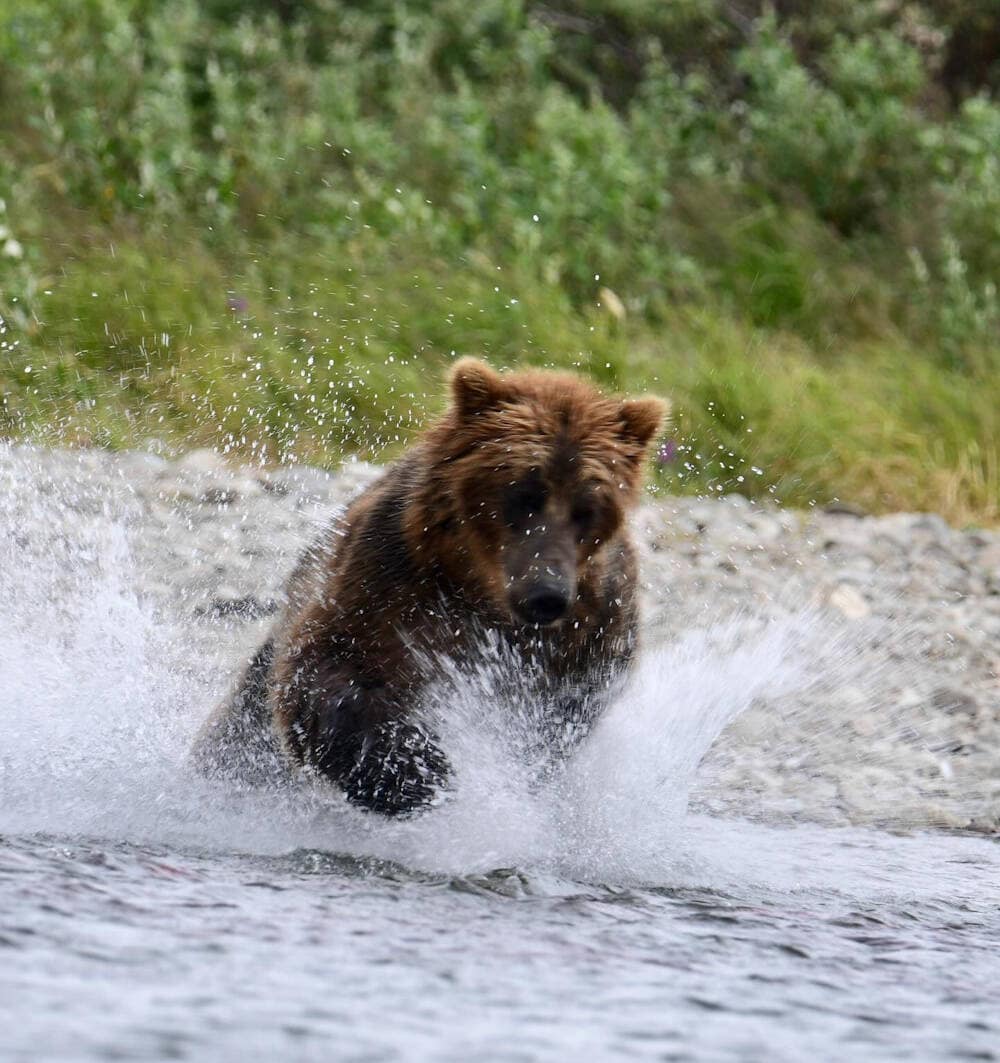
The visual character changes too. Earlier trips may feature green landscapes and bears spread across open habitat. Salmon-focused trips can bring dramatic fishing behavior and different photography opportunities. Weather and water conditions vary within every month, so fixed promises are less useful than current local guidance.
For a month-by-month planning discussion, read Best Time for Katmai Bear Viewing. Before making nonrefundable plans around one location, call the operator and ask what is realistic for your exact dates.
Floatplane, wheel plane or helicopter?
Floatplane
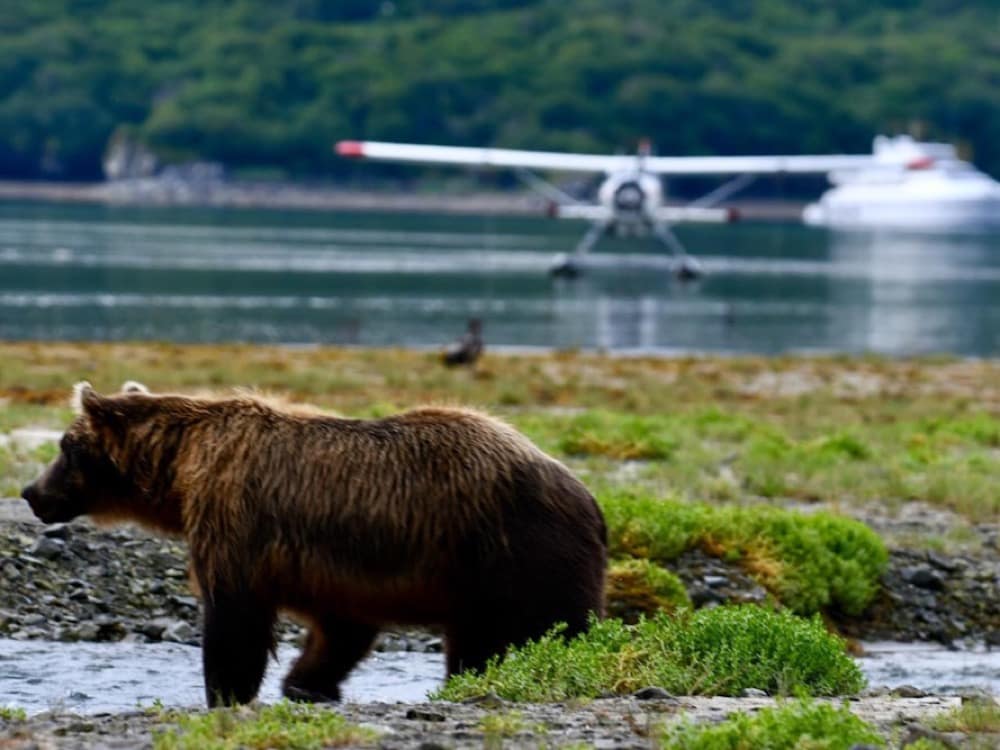
A de Havilland Beaver on floats is a classic Alaska experience. It can use lakes and protected water landing areas, making it well suited to many Katmai and Lake Clark routes. The flight itself is a major part of the day, with views across Cook Inlet, volcanoes, glaciers and roadless country.
Wheel plane
Wheel planes with tundra tires can use appropriate beaches and remote landing areas when seasonal and ground conditions allow. This option is not available for every date or destination, so it should be confirmed directly rather than assumed.
Helicopter
Helicopters offer flexible routing, excellent visibility and access to landing areas that may not suit an airplane. They also generally have lower entry points and larger doors, which can help some guests. Aircraft choice should still be based on the group, route, conditions and experience - not the idea that one aircraft is always better.
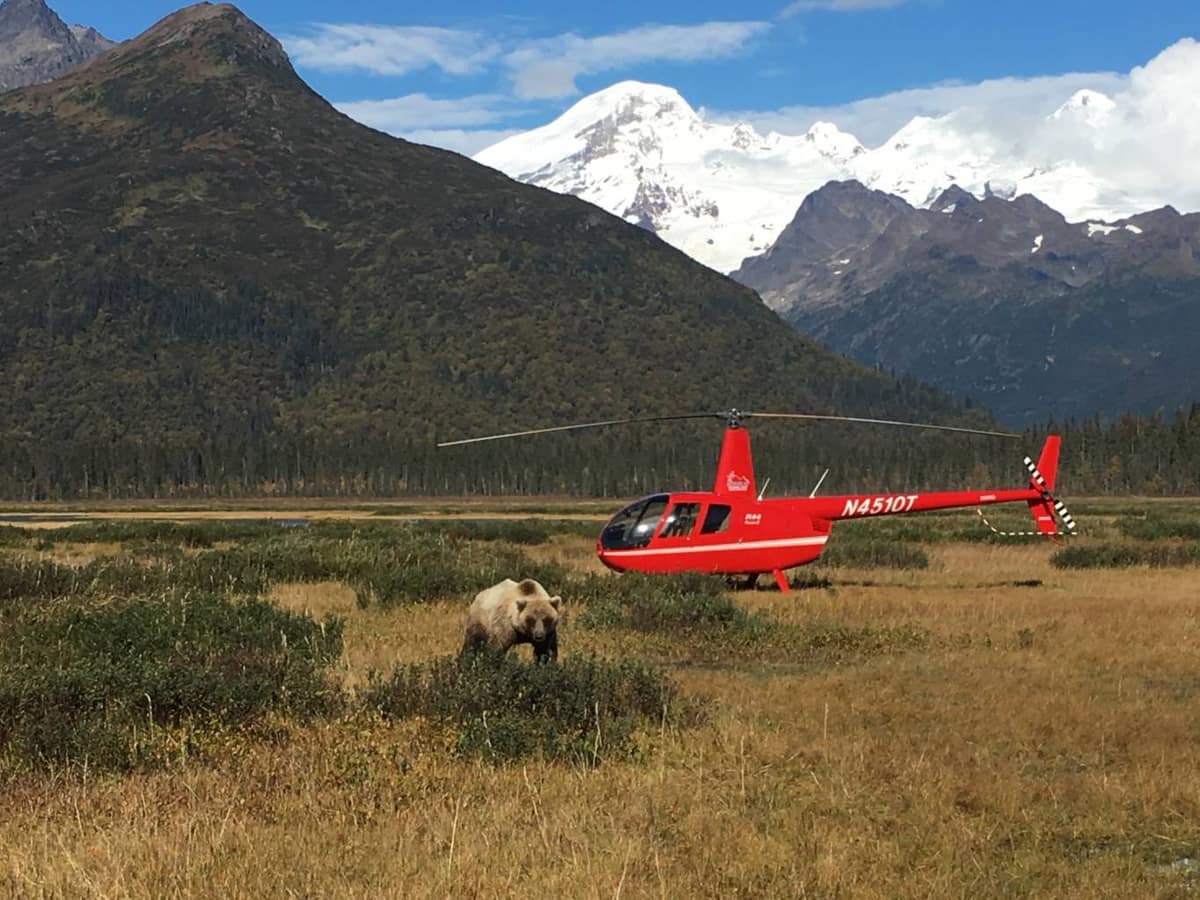
What happens on a fly-in bear-viewing day?
- Check in in Homer. Meet the team, review the latest conditions and confirm the day’s plan.
- Fit field gear. Provided equipment may include rain gear, hip boots, gloves, binoculars, water and snacks.
- Receive a safety briefing. Your guide explains aircraft procedures, bear behavior, group conduct and expected terrain.
- Fly across Cook Inlet. The route may pass volcanoes, glaciers, coastline and large areas without roads or development.
- Land and move as a group. Ground time varies with the aircraft, location, wildlife, weather and safe operating window.
- Observe without pressuring wildlife. The goal is patient, respectful viewing while bears continue their natural behavior.
- Return to Homer. Flight and return times can shift, so avoid placing a tightly timed commitment immediately afterward.
The complete experience is commonly several hours long, but wilderness aviation does not follow a minute-by-minute theme-park schedule. Ask about the realistic range for your selected trip and date.
Safety, clothing and photography
Bear and aviation safety
Follow the guide’s instructions, stay with the group, keep food secured and never approach a bear for a photograph. Safe spacing depends on the animal, habitat and situation. Remote aviation also requires conservative decisions about visibility, wind, water and landing conditions. A weather delay or route change is a sign that the pilot is making an operational decision - not that the day has failed.
What to wear
Dress in layers with a waterproof outer shell. Avoid cotton jeans as your primary field layer because they stay cold when wet. Wear or bring sturdy footwear as instructed, warm socks, a hat and light gloves. Even a pleasant forecast can feel cool near the coast or after standing quietly outside.
Use the complete bear-viewing clothing and packing guide before departure.
Photography
Bring the camera you can operate confidently. A moderate telephoto lens is useful, but do not experience the entire day through a viewfinder. Pack spare batteries, memory cards and a weather cover. Keep your bag light enough to meet the aircraft operator’s limit, and never move away from the group to improve an angle.
For more detail, read How to Photograph Brown Bears Safely.
Families, mobility and comfort
Age limits, aircraft seating and walking requirements vary. Terrain may include packed trail, beach, mud, water, tall grass or marshy ground. If anyone in your group has a recent surgery, limited mobility, balance concerns or difficulty entering a small aircraft, discuss it before booking. The team can explain which aircraft and trip style may fit best, but not every route works for every guest.
Families should consider the child’s ability to follow instructions, remain quiet near wildlife and stay comfortable through a long, flexible day. Review the bear-viewing FAQs and call with individual questions.
How much does Alaska bear viewing cost?
Price reflects aircraft time, fuel, maintenance, pilot and guide expertise, remote logistics, field equipment and the limited capacity of a small group. Floatplane and helicopter products have different operating costs. Because prices and availability can change, use the current booking page rather than an older article or archive table.
See current options and live dates on the Bear Viewing Safari page.
Bear-viewing booking checklist
- Choose the experience you want: iconic falls, open coast, photography, fewer people or maximum aircraft flexibility.
- Ask how the operator selects destinations and handles weather changes.
- Confirm aircraft type, approximate total duration, walking expectations and baggage limit.
- Discuss ages, mobility needs and medical considerations before paying.
- Read the cancellation and weather policy.
- Leave flexibility around the departure window.
- Use current booking pages for prices and availability.
Bear-viewing safaris
See the trips, aircraft and current options.
Compare floatplane and helicopter bear-viewing experiences, then choose the trip that best fits your group.
Need help with dates, mobility or photography? Call 1-888-696-BEAR.
© 2026 · Alaska Ultimate Safaris | Alaska Helicopter Bear Viewing Tour