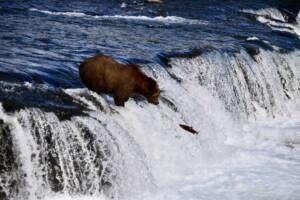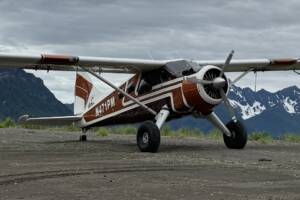
Brown bear viewing in Alaska is one of the most unforgettable adventures you can experience, and Homer is one of the best places to begin your journey.
The wrong jacket can turn a bear safari into a long, cold wait. The right layers let you stay comfortable, keep your focus, and enjoy the moment when a coastal brown bear steps out of the grass 50 yards away. If you’re wondering what to wear bear viewing Alaska, the short answer is this: dress for changing weather, wet ground, and hours outside, even when the forecast looks friendly.
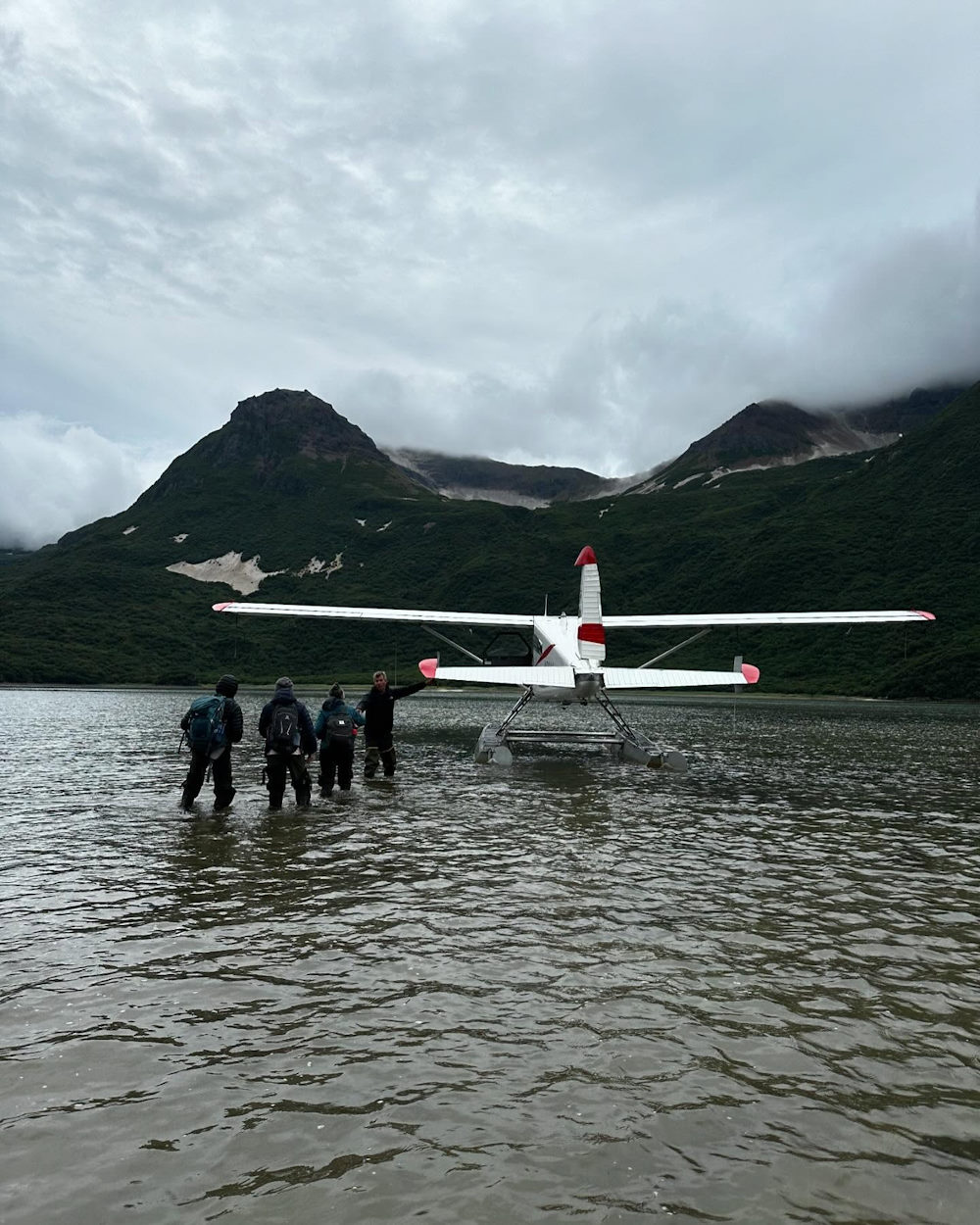
Brown bear viewing in Alaska is not a stroll on a paved path. You may be stepping off a bush plane onto a beach, standing in wind off the water, walking across soft tundra, or waiting quietly while the weather shifts three times in an afternoon. Premium bear trips are built around access to wild country, and wild country does not care what the weather app said over breakfast.
What to Wear Bear Viewing Alaska in Real Conditions
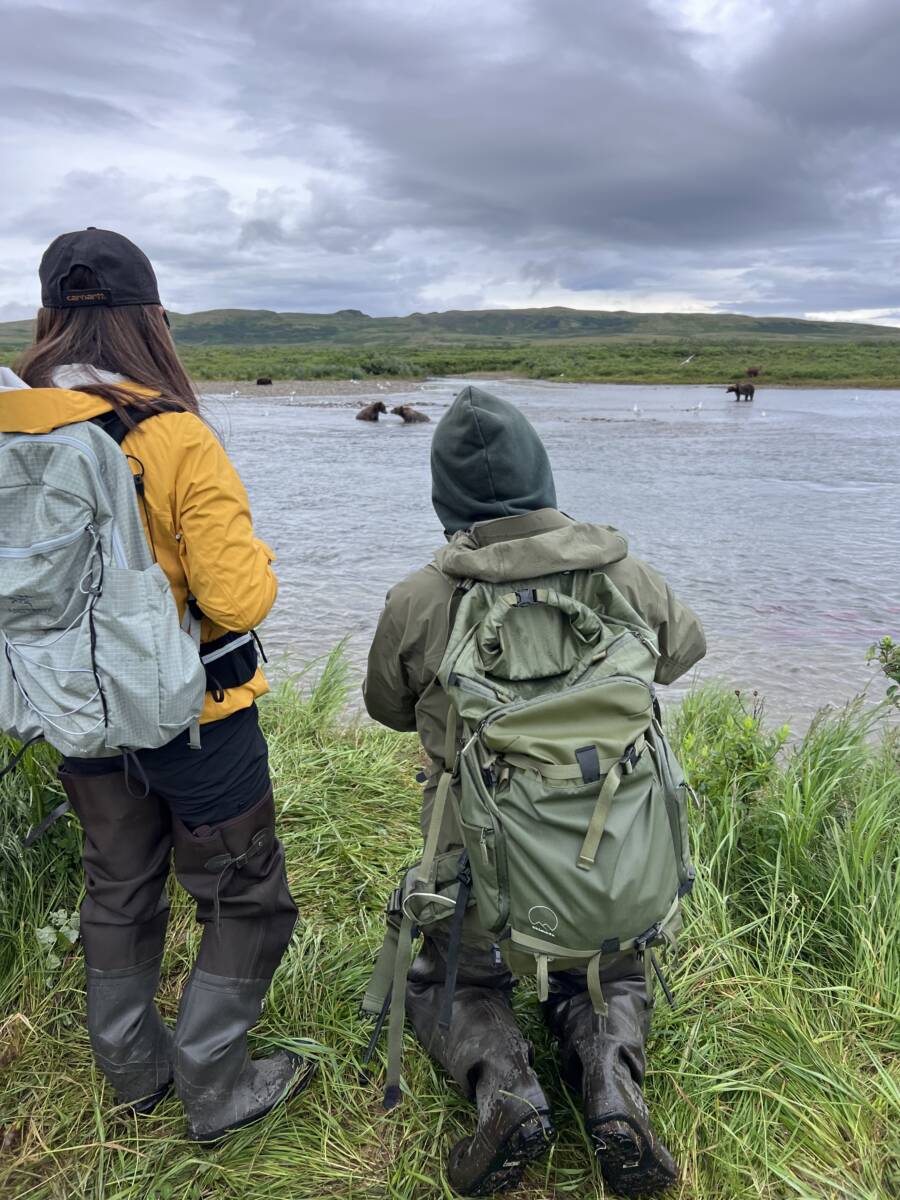
Start with the mindset that layering wins every time. You want clothing that handles cool mornings, surprise rain, ocean breeze, and periods of standing still. Even on a bluebird day, conditions can feel colder than expected once you’re outside for a few hours.
Your base layer should be comfortable, breathable, and quick-drying. Merino wool or quality synthetic fabric is the right call. Cotton is not. A cotton shirt can feel fine in town, then turn cold and clammy once the wind picks up or light rain starts. That matters more than people think when you’re focused on wildlife and not moving much.
Over that, wear a mid-layer that gives you real warmth without bulk. A fleece jacket or light insulated layer works well. This is the piece you’ll appreciate during the flight, during a wait on the beach, or when clouds roll in and the temperature drops fast.
Your outer layer should be waterproof, not just water-resistant. That means a true rain jacket with a hood, and ideally rain pants if your trip includes beach landings, wet brush, or variable weather. In coastal Alaska, staying dry is half the battle. If your shell blocks wind well too, even better.
The Best Outerwear for Bear Viewing in Alaska
For brown bear viewing in Alaska, layers matter more than fashion. Weather can change quickly, even on a beautiful summer day. A lot of visitors overpack heavy winter gear and underpack smart weather protection. Unless you’re traveling in a very cold shoulder-season window, you usually do not need a giant parka. What you do need is a shell system you can adjust.
A solid rain jacket should fit over your base and mid-layers without feeling tight through the shoulders. If it restricts movement, you’ll notice it when you’re climbing in and out of aircraft or carrying a camera. Look for a hood that stays put in the wind and cuffs that actually seal out rain.
Rain pants are worth bringing even if you hope not to use them. They add warmth, keep you dry on wet grass or driftwood, and make a big difference when the weather turns. Many guests bring them and end up grateful they did.
If you’re deciding between one heavy coat and a lighter layered system, choose the layers. Alaska weather changes quickly, and flexible clothing is more useful than one piece that’s too warm in the sun and not versatile enough when conditions shift.
Footwear Can Make or Break the Day
The best clothing for brown bear viewing in Alaska should keep you warm, dry, and comfortable while you wait quietly in wild country. If there is one place not to cut corners, it’s your boots. Bear viewing often means uneven ground, damp beaches, mud, shallow water, or slick vegetation. Comfortable waterproof footwear is essential.
Most travelers do best in waterproof hiking boots with good ankle support and decent tread. They should already be broken in before your trip. Brand-new boots on a remote safari are a gamble you do not want to take.
Some outings and landing areas may be especially wet, and in those cases taller rubber boots can be useful. It depends on the route, terrain, and operator. If you’re unsure, ask in advance what ground conditions are typical for your trip date. The best answer is not universal because Alaska is not universal.
Pair your boots with wool or synthetic hiking socks. Bring an extra pair in your day bag if you can. Dry feet change your whole outlook.
What Not to Wear for Bear Viewing Alaska
Jeans are the classic mistake. They get wet, stay wet, restrict movement, and feel colder by the hour. Save them for dinner in town.
Fashion sneakers are another bad bet. Even expensive ones rarely handle mud, wet tundra, or beach landings the way proper boots do. Once your feet are soaked, the day gets longer.
Skip loud, swishy, uncomfortable clothing that makes you fidget. You do not need camouflage, but you do want neutral outdoor clothing that lets you move quietly and stay settled. Earth tones, grays, blues, and dark greens all work well.
Also leave behind anything too bulky. Oversized coats, stiff layers, and overstuffed pockets can make travel by small aircraft less comfortable and less practical. Pack with purpose.
Dress for the Wait, Not Just the Walk
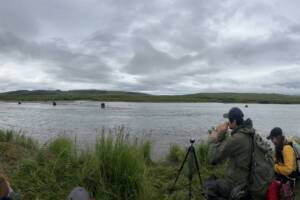
One of the biggest surprises for first-time bear viewers is how much time is spent standing, watching, and waiting. That is part of the reward. You’re not rushing through a wildlife exhibit. You’re in the bears’ world, on their schedule.
That means your clothing needs to keep you comfortable while inactive. A setup that feels perfect during a short walk may feel chilly after 40 minutes of glassing a meadow or watching a sow and cubs feed along the sedge line. This is where a warm mid-layer, good socks, and a wind-blocking shell earn their place.
Gloves and a beanie are often worth packing, even in summer. You may not wear them all day, but when the wind cuts across an open beach, small items make a big difference. The same goes for a neck gaiter or buff if you’re sensitive to cold.
Camera Comfort Matters Too
Many guests come to capture the moment as much as witness it. If that’s you, dress so you can handle your camera easily. Thin gloves are better than bulky ones if you’re shooting. Jackets with accessible pockets help. A hood that doesn’t block your peripheral vision is a small detail until a bear appears where you didn’t expect it.
Think about your pack as part of your clothing system. A small, weather-ready daypack lets you stow a layer when you warm up and grab it fast when the wind shifts. It also keeps extra batteries, lens cloths, and dry socks protected.
If you wear glasses, bring a hat with a brim to help with rain. If you wear contact lenses, pack backup glasses. Remote Alaska is a poor place to discover that one tiny comfort item mattered more than you realized.
Seasonal Reality: Summer Still Isn’t Predictable
Most bear viewing trips happen in summer, but summer in Alaska is not the same as summer in the Lower 48. Conditions are often mild, sometimes beautiful, and occasionally raw. A warm July day can feel easy in the sun and cold near the coast an hour later.
That is why the best answer to what to wear bear viewing Alaska is not a single outfit. It’s a system. Light base layer, insulating middle, waterproof shell, dependable boots. Build from there based on your own comfort level and the month you’re traveling.
If you run cold, bring an extra insulation piece. If you tend to overheat, focus on breathable layers you can peel off quickly. The goal is not to dress for a photograph. The goal is to stay out long enough, and comfortably enough, to enjoy a world-class wildlife encounter.
A Simple Packing Approach That Works
Keep it premium, practical, and proven. Wear moisture-wicking layers, a fleece or light puffy, a waterproof jacket, waterproof pants if conditions call for them, wool socks, and waterproof boots. Add a hat, light gloves, and sunglasses. Bring a small bag with an extra layer and spare socks.
That setup works because it matches the reality of remote bear country – wind, moisture, waiting, and movement all in the same day. It also respects the experience. When you’re not distracted by cold hands or wet feet, you notice more. You hear the gulls, watch the cubs wrestle, and stay present when the big boar finally appears.
At Alaska Ultimate Safaris, that kind of preparation helps guests make the most of rare access and unforgettable bear encounters in places far beyond the crowded standard routes. The better you’re dressed, the more freedom you have to enjoy the wild instead of managing discomfort.
Bring layers. Bring real rain protection. Bring boots you trust. Then step onto the beach ready for Alaska on Alaska’s terms. That’s when the experience gets good.
Planning a Bear Viewing Trip from Homer?
What you wear for bear viewing in Alaska can make a big difference in how comfortable you feel throughout the day. Remote bear viewing often means changing weather, beach landings, soft tundra, wind, rain, and time spent standing quietly while bears move through wild country.
At Alaska Ultimate Safaris, our bear viewing trips from Homer are built around current bear activity, weather, aircraft access, and guest comfort. Whether your adventure takes you toward Katmai, Lake Clark, or another remote coastal viewing area, dressing in smart layers helps you enjoy the experience from takeoff to landing.
For guests planning their own adventure, our Alaska bear viewing tours offer a small-group way to experience wild Alaska with aircraft access from Homer.